
For people who help people
You help people for a living.
Learn to design learning that changes them.
Teachers, nurses, counselors, coaches and wellness pros: the HARPER Method shows you, step by step, how to design lessons and trainings around how people really think, feel and learn. Build a portfolio that shows your thinking, get honest feedback, and step confidently into your first instructional design role.
Get the free checklistTry it free for 30 days
Already have a portfolio? Get expert eyes on it this week.

Start where you are
Four ways to build an instructional design portfolio that gets you hired.
Free
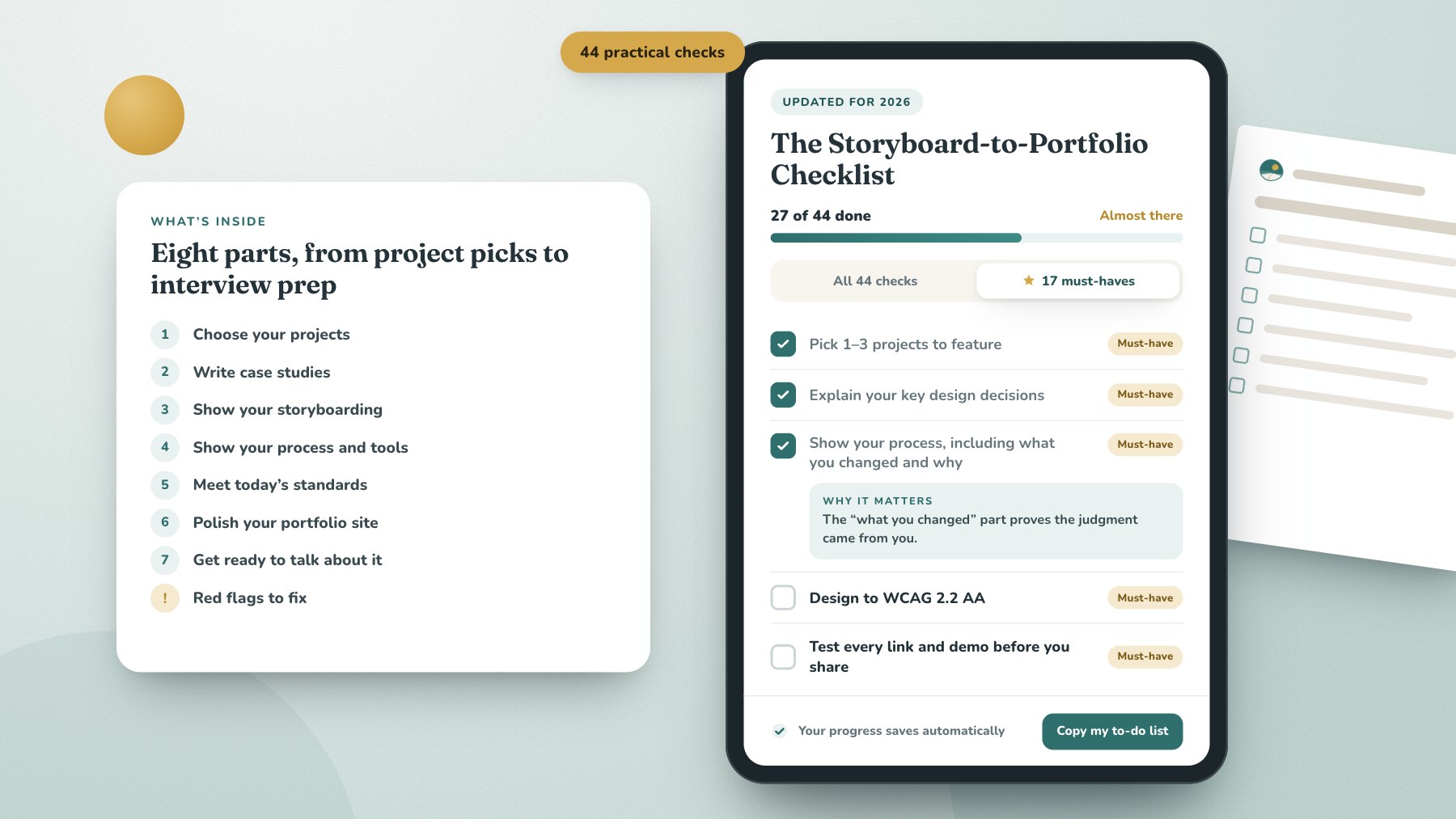
Storyboard-to-Portfolio Checklist
44 practical checks that take you from storyboard to a finished, hire-ready portfolio piece.
Free for 30 days
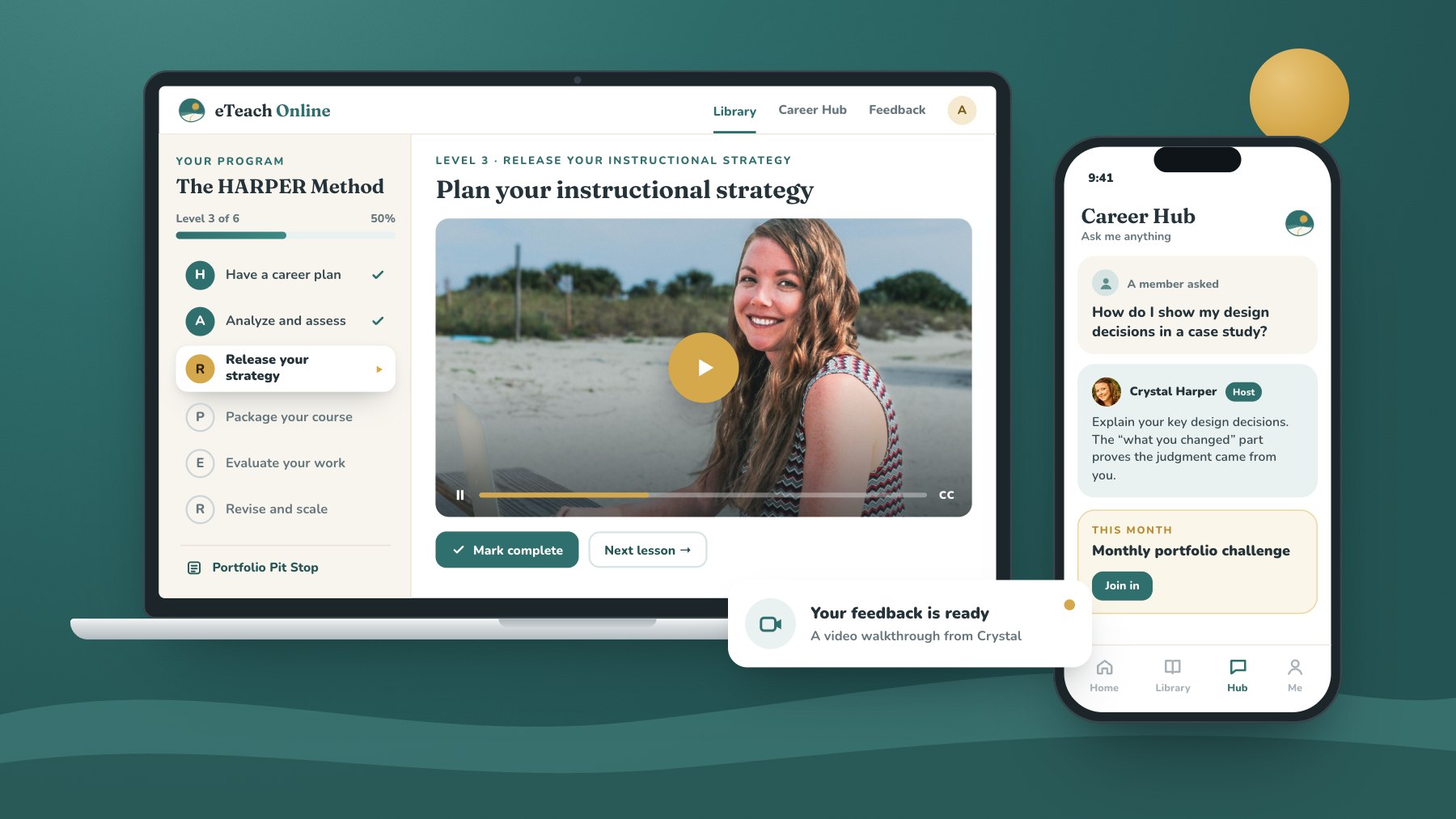
The Membership
Learn instructional design step by step with the HARPER Method, then turn what you learn into portfolio pieces with the Portfolio Pit Stop, a monthly challenge and the Career Hub. Try it free for 30 days, or start lighter with the Studio at $47/month.
$197
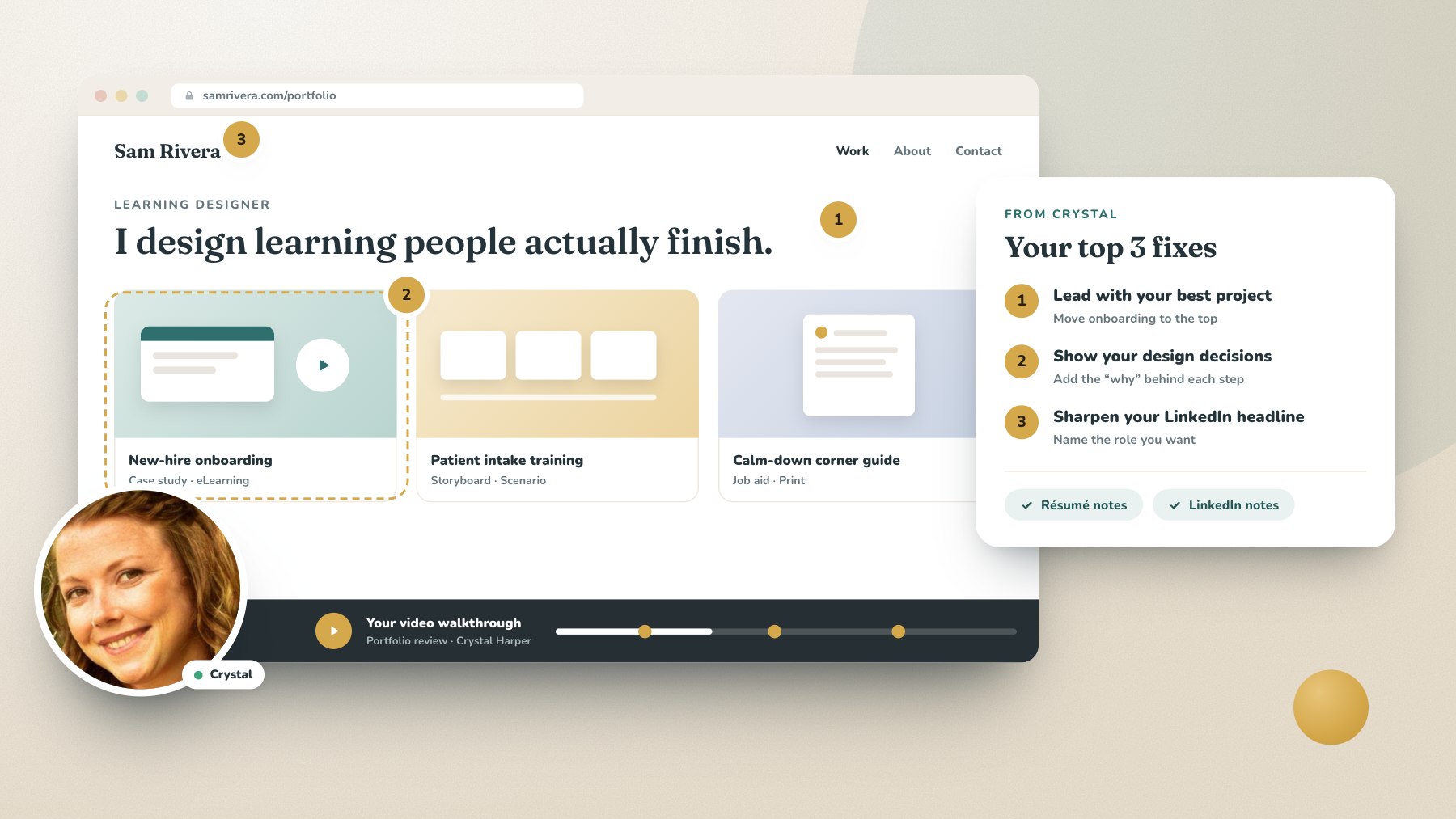
Portfolio Review
Personal feedback on your portfolio, résumé and LinkedIn, plus your top 3 fixes, in 5 business days.
Waitlist open
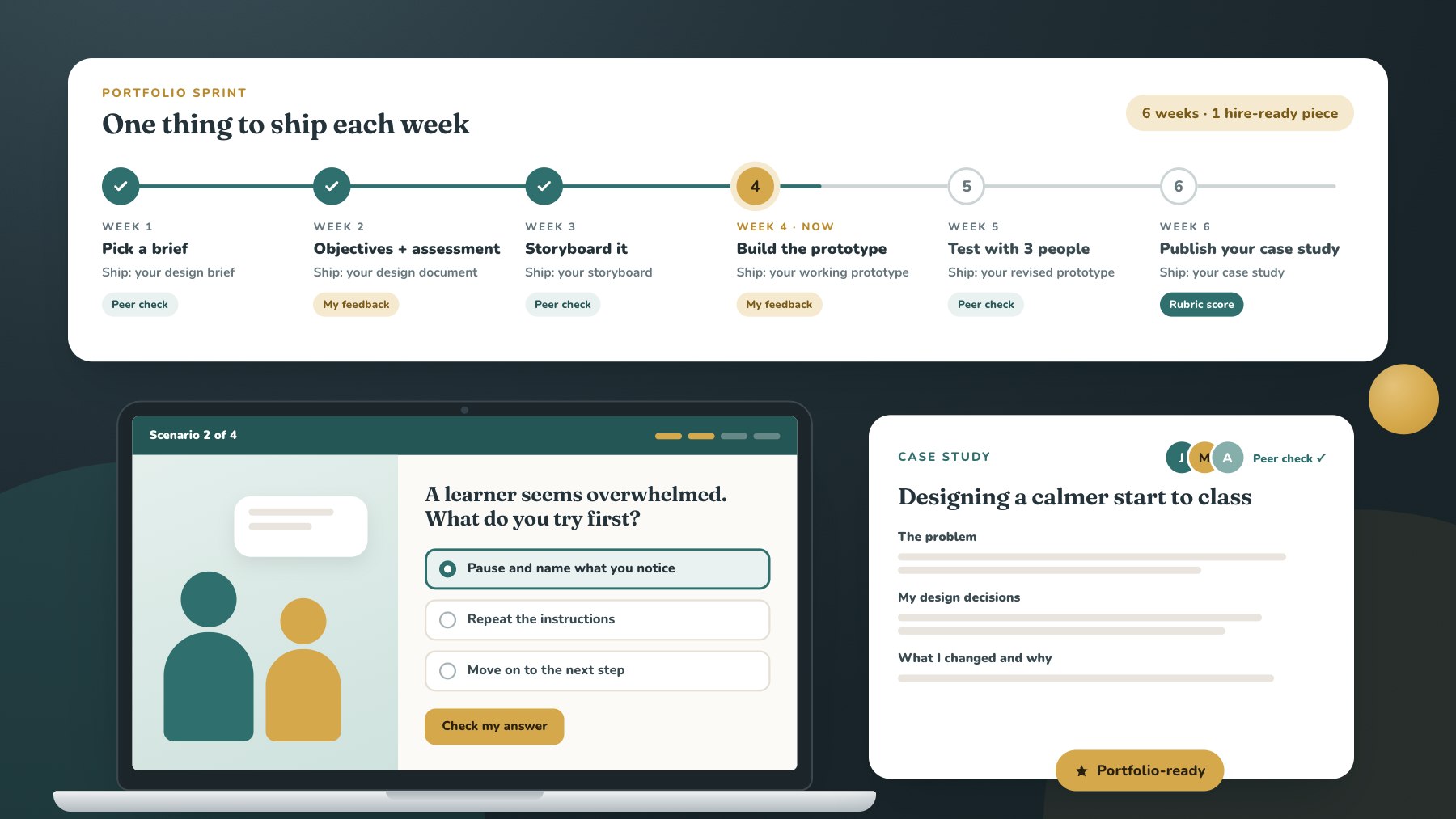
Portfolio Sprint
Ship one hire-ready portfolio piece in 6 weeks, with feedback at every milestone. Starts January 11.
From the community
What members say
“Crystal has created an easy-to-follow method that, in my opinion, should be adopted more. … As soon as you join, you will feel right at home. I feel this is one of the best investments I’ve made.”
Charles Parker
Instructional Design & Tech Specialist, Delaware Technical Community College
“The community is wonderful and comprehensive. It includes everything an up-and-coming instructional designer needs.”
Reba Martinez
eLearning Project Manager
Free mini-course
Not sure what to learn first?
The Free ID Kickstart helps you understand the instructional design field, recognize the strengths you already bring from teaching, nursing, counseling or coaching, and choose your next steps without trying to learn everything at once.
Free · Delivered by email · Start today
In three short lessons, you will:
- Understand what instructional designers actually do
- Identify the skills you already have
- Create a clear plan for your next steps
New & free for 2026
The Storyboard-to-Portfolio Checklist
Building your instructional design portfolio? This free, interactive checklist walks you from your first storyboard to a finished, hire-ready portfolio piece, with 44 practical checks for what hiring managers look for in 2026.
- Pick the right 1–3 projects and write case studies that get noticed
- Show your storyboards, design decisions and the tools you used, with your judgment visible
- Check items off as you go. Your progress saves automatically.
Free reading
Three articles to read first
A short path from “Is this career right for me?” to a portfolio piece you’re proud to share.
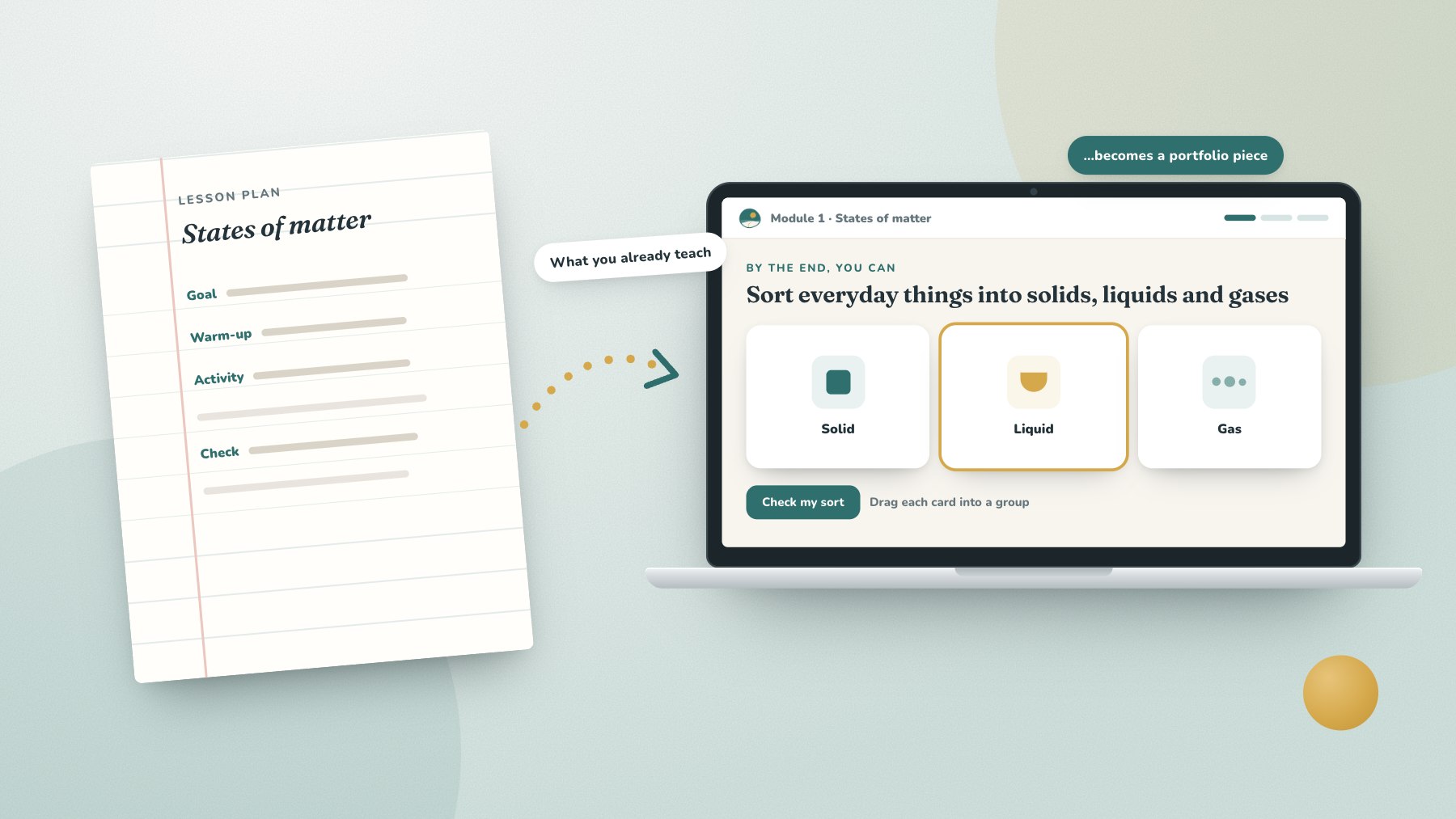
Step 1 · Explore
Instructional Design: A Great Career Path for Teachers
The skills teachers, nurses, counselors and coaches already use, from writing objectives to engaging learners, and how they carry straight into instructional design.
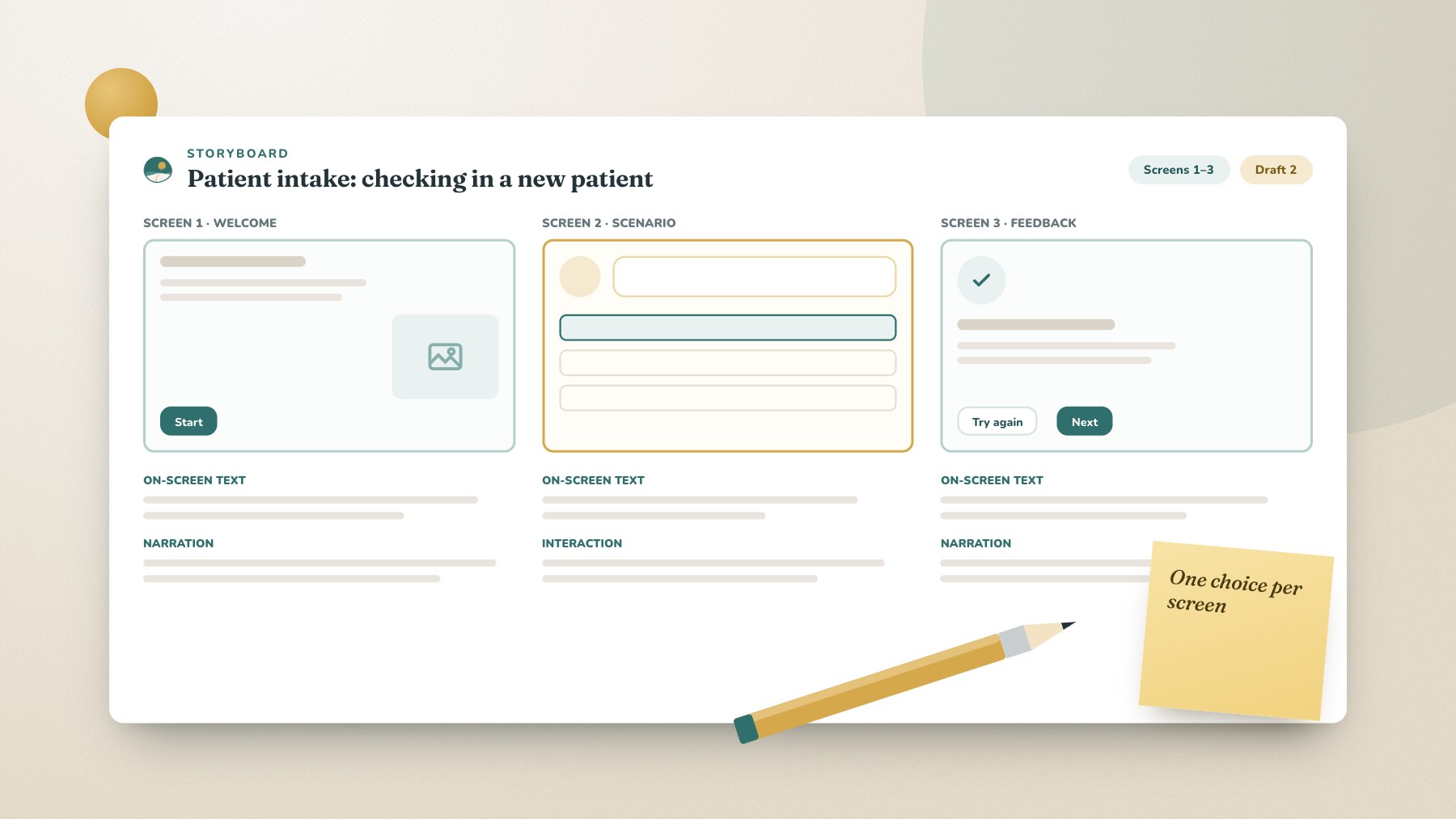
Step 2 · Build
Step-by-Step Guide in Creating Storyboards
How to plan the content, visuals, media and flow of every screen before you build anything.
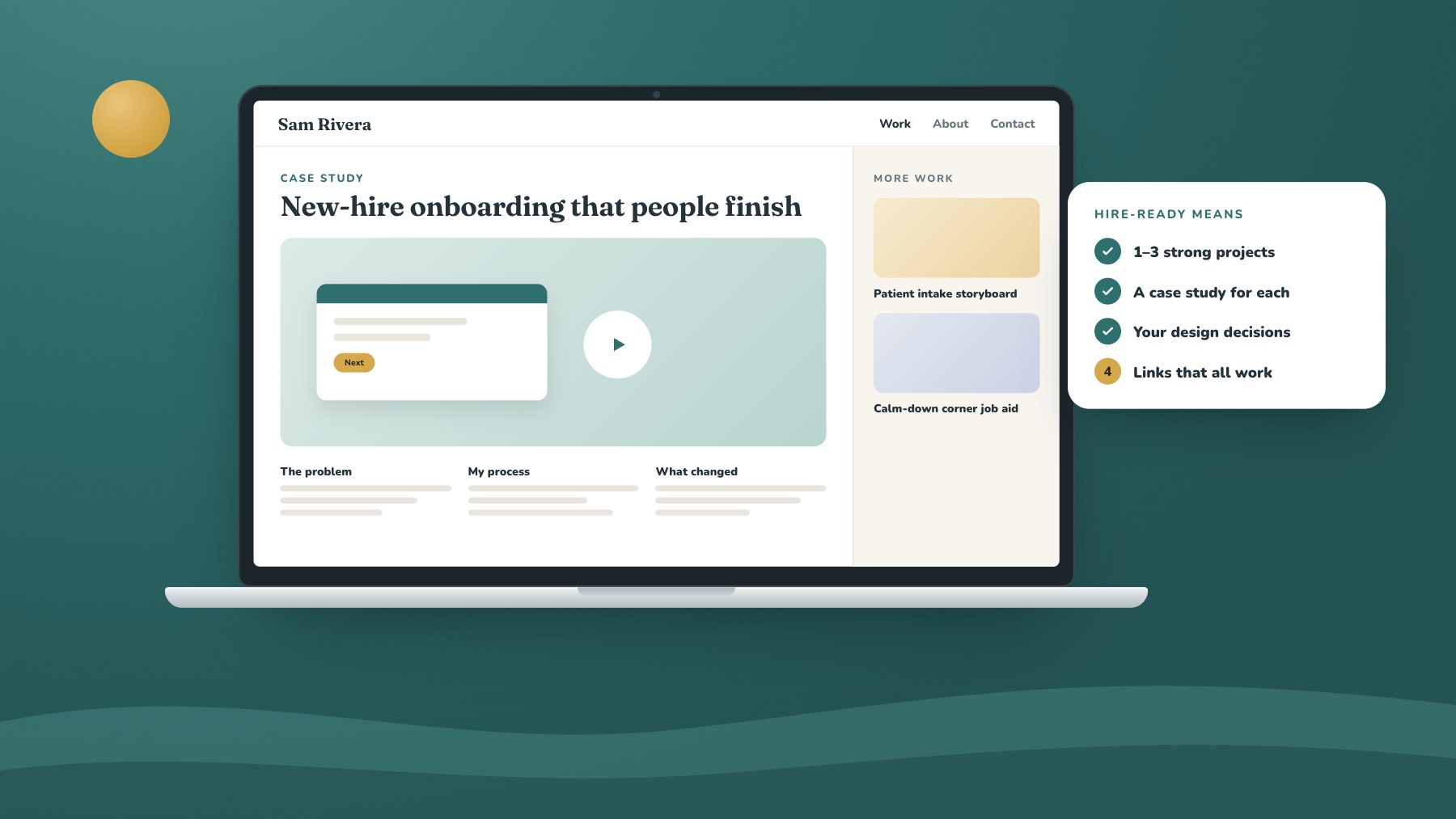
Step 3 · Showcase
What Should You Include When Building Your Portfolio?
What to include, and how to show your design process so employers can see how you think.